The Future of Content Distribution
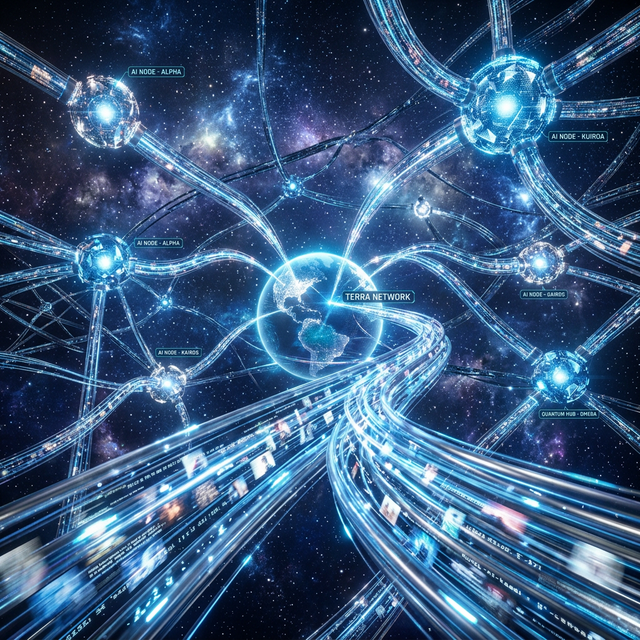
For the past decade, the playbook for content creators was deceptively simple: pick a platform, master its algorithm, post consistently, and wait for the views to roll in. YouTube was for long-form, Instagram for photos, and TikTok for short clips. Success was defined by how well you could optimize for a single "walled garden."
That era is over. As we move further into 2026 and beyond, the landscape of content distribution is undergoing a seismic shift. The rise of AI-generated content, the fragmentation of audience attention, and the increasing hostility of platform algorithms toward external links have forced a fundamental rethinking of strategy. The future of distribution is no longer about platform dependency; it is about ecosystem ownership.
In this comprehensive guide, we will explore the emerging trends that will define the next generation of content distribution. From the death of the generic link to the rise of owned audiences and AI-driven personalization, we will uncover how forward-thinking creators are building resilient growth engines that survive algorithm updates and thrive in a chaotic digital world.
1. The End of the "One-Size-Fits-All" Link
Historically, distribution relied on the humble URL. You copied a link from your browser and pasted it everywhere. But in a multi-device, multi-app world, the standard URL is broken. It treats a user on an iPhone the same as a user on a desktop, and a viewer in the YouTube app the same as one stuck in a mobile browser.
The future of distribution is context-aware. Smart links and deep-linking technology are becoming the standard. These intelligent URLs detect the user's device, operating system, and installed apps, routing them to the optimal destination instantly.
- Mobile Users: Are sent directly into the native app (e.g., opening a video in the YouTube app instead of a slow mobile website), drastically reducing bounce rates.
- Desktop Users: Are sent to rich, information-dense web pages optimized for larger screens.
- Global Audiences: Can be routed to region-specific content or localized landing pages automatically.
Creators who cling to static links are leaking traffic. The future belongs to those who use dynamic distribution tools to ensure every click counts, regardless of where it originates.
2. From Rented Land to Owned Audiences
The greatest risk in modern content creation is building your entire business on "rented land." When you rely solely on YouTube subscribers or Instagram followers, you are at the mercy of platform policy changes, algorithm shifts, and even account suspensions. One update can wipe out your reach overnight.
The future of distribution prioritizes audience ownership. This means actively migrating your casual viewers into channels you control:
- Email Newsletters: The open rate of an email is far more reliable than the impression rate of a social post. Building a robust email list is the single most important asset a creator can own.
- Private Communities: Discord servers, Slack groups, and paid membership platforms (like Patreon or Circle) create direct lines of communication that algorithms cannot intercept.
- SMS and Push Notifications: With email inboxes becoming crowded, direct-to-phone notifications are becoming a high-value distribution channel for urgent updates.
The goal is to use social platforms purely for discovery (top of funnel) while funneling engaged users into owned ecosystems for retention and monetization (bottom of funnel).
Key Insight: In the future, your subscriber count on a platform will matter less than the size of your owned email list. One thousand true fans on your email list are worth more than one million passive followers on Instagram.
3. The Rise of AI-Driven Personalization
We are entering the age of hyper-personalization. Generic mass-broadcasting is losing effectiveness as audiences become desensitized to noise. Artificial Intelligence is enabling creators to distribute content in ways that feel individually tailored to each viewer.
Imagine a future where:
- Your newsletter automatically rewrites its headline based on the recipient's past click behavior.
- Your video recommendations change dynamically based on the time of day the user is watching.
- AI agents summarize your long-form content into personalized digests for users who prefer reading over watching.
Distribution is no longer just about pushing content out; it is about shaping the content to fit the user's specific context. Creators who leverage AI tools to segment their audience and personalize their distribution streams will see significantly higher engagement rates than those who stick to static broadcasting.
4. Cross-Platform Synergy and Repurposing
The siloed approach—"I am a YouTuber" or "I am a TikToker"—is becoming obsolete. The future is omnipresence. However, being omnipresent doesn't mean creating unique content for every platform from scratch; that is a recipe for burnout.
The winning strategy is intelligent repurposing. A single long-form video asset is not just a video; it is a content mine:
- The Core: The full 20-minute video on YouTube.
- The Tease: Three 60-second vertical clips for TikTok, Reels, and Shorts.
- The Discussion: A text-based thread on X (Twitter) or LinkedIn summarizing the key points.
- The Visual: Infographics and quotes for Instagram Stories and Pinterest.
- The Audio: The soundtrack extracted for a podcast episode.
Crucially, all these fragments must link back to the core asset using smart distribution links. This creates a "surround sound" effect where your audience encounters your brand across multiple touchpoints, all funneling traffic back to your central hub.
5. The Shift from Search to Discovery
For years, YouTube was a search engine. People looked for "how to fix a leak." Today, and increasingly in the future, distribution is driven by discovery. Algorithms are getting better at predicting what users want before they even know they want it.
This shifts the distribution burden from SEO (Search Engine Optimization) to PSO (Platform Signal Optimization). It is no longer enough to have the right keywords in your title. You must generate strong behavioral signals:
- Velocity: How quickly does your content gain traction after publishing?
- Session Time: Does your content keep users on the platform longer?
- Cross-Platform Signals: Are people talking about your video on Twitter? Sharing it on WhatsApp? External buzz is increasingly factored into internal recommendation engines.
Future distribution strategies must focus on igniting these signals immediately upon launch, using owned audiences (email/SMS) to drive that initial wave of engagement that triggers the algorithmic flywheel.
6. Community-Led Distribution
The most powerful distribution network in the world is not an algorithm; it is a community. As trust in institutions and platforms erodes, people are turning to peer recommendations.
Creators are beginning to treat their superfans as distribution partners. By providing shareable assets, exclusive discussion topics, and incentives for sharing, creators can turn their audience into a volunteer marketing army.
Tools that make sharing frictionless—like one-tap deep links that open directly in WhatsApp or Telegram—are critical here. If a fan wants to share your video with a friend, the process must be instantaneous. Every second of friction reduces the likelihood of the share happening.
The "Waterfall" Distribution Model
Adopt a structured flow for your content:
Day 0: Notify owned audience (Email/SMS) immediately upon launch to seed initial velocity.
Day 1: Release short-form teasers on TikTok/Reels with deep links to the full video.
Day 3: Post discussion threads on Twitter/LinkedIn to spark debate.
Day 7: Compile feedback into a community post or follow-up video.
This keeps the content alive for weeks rather than dying after 24 hours.
7. The Challenge of Attention Economics
Ultimately, the future of distribution is a battle for attention. With AI lowering the barrier to content creation, the volume of content is exploding. We are moving from an economy of scarcity (not enough content) to an economy of abundance (too much content).
In this environment, trust becomes the primary currency. Users are becoming more selective about who they let into their feeds. Distribution strategies that rely on clickbait, misleading thumbnails, or spammy tactics will face diminishing returns as platforms crack down and users become more savvy.
Sustainable distribution in the future will be built on brand equity. When users see your name, they click because they trust the quality, not because they were tricked by a headline. This means your distribution strategy must be aligned with your brand values. Consistency, authenticity, and value delivery are the only ways to win the long game.
Warning: Avoid "growth hacks" that violate platform terms of service. Buying views, using bot networks, or engaging in "sub4sub" schemes might give a temporary spike, but they poison your analytics and can get your channel permanently banned. The future favors authentic growth.
Conclusion: Building Your Own Highway
The future of content distribution is not about finding a loophole in the latest algorithm. It is about building your own infrastructure. It is about owning your audience, personalizing your message, and using technology to remove every ounce of friction between your content and your viewer.
The creators who thrive in the coming years will be those who stop treating platforms as destinations and start treating them as feeders for their own independent ecosystems. They will use smart links to bridge the gap between apps, email to bypass the algorithm, and community to amplify their reach.
The tools are available. The strategies are clear. The question is no longer "How do I get viral?" but "How do I build a system that grows sustainably regardless of the trends?" Start building your highway today, and let the platforms be merely the on-ramps.
Want More Creator Tips?
Join thousands of creators who use OpeninYoutube to grow their channels.
Sign Up Now